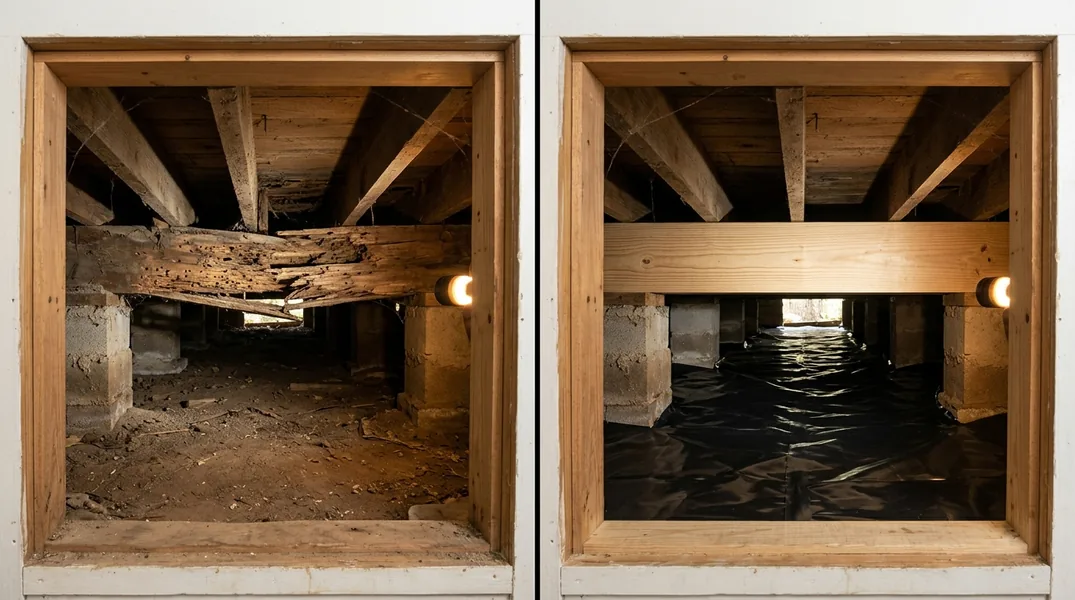
Why Floors Sag: The Crawl Space Connection
If you own an older home in Huntsville, you may have noticed your floors aren't quite as level as they used to be. That subtle dip or bounce when you walk across a room is more than just a cosmetic quirk. A sagging floor is your home's way of telling you that something is wrong beneath the surface, and in most cases, the problem originates in the crawl space.
The crawl space under your home is a vulnerable zone. It's exposed to moisture, temperature fluctuations, and pests, making it the perfect breeding ground for structural damage. When floor joists in the crawl space begin to fail, the entire floor system above loses its support. The weight of your home, furniture, and family members gradually bears down on weakened wood, causing visible sagging over time. Understanding this connection is the first step toward addressing the problem before it becomes a safety hazard.
Common Crawl Space Causes of Sagging Floors
Several factors can compromise the structural integrity of crawl space joists. Wood Rot & Dry Rot Repair is one of the most common culprits. When moisture accumulates in the crawl space due to poor drainage, inadequate ventilation, or plumbing leaks, wood begins to decay. Rot weakens the cellular structure of the wood, reducing its load-bearing capacity. Over time, even a small area of rot can spread and compromise multiple joists, leading to noticeable sagging in the floor above.
Termite Damage Repair is another serious concern for Huntsville homeowners. Termites feed on cellulose in wood and can silently destroy joists from the inside out. Unlike rot, which is often visible, termite damage may not be apparent until the structural damage is severe. Moisture problems, poor crawl space ventilation, and inadequate drainage all create ideal conditions for both wood rot and termite infestations.
Settlement and age also play a role. Older homes naturally shift and settle over decades. However, when combined with moisture damage or pest issues, this natural movement can accelerate the deterioration of support structures. A professional inspection can determine whether your sagging floor is due to normal settling or active structural decay that requires immediate attention.
Identifying Floor Joist Damage: What Homeowners Should Know
Before you can fix a sagging floor, you need to understand what's actually happening to your floor joists. Floor joists are the horizontal beams that support your subfloor and everything above it. When these joists fail, the entire structural system becomes compromised. Floor Joist & Subfloor Repair requires a thorough assessment of the damage, which is why a professional inspection is essential.
Signs of joist damage include visible sagging, bouncy or squeaky floors, cracks in drywall or plaster, doors and windows that stick, and a musty odor in the crawl space. If you notice any of these red flags, it's time to get a professional evaluation. A qualified carpenter can determine whether the joists are damaged by rot, termites, water damage, or structural failure. They can also assess whether the damage is localized or widespread, which directly impacts the scope and pricing of repairs.
Sagging Floor & Joist Repair Cost in Huntsville: What to Budget
The cost of repairing sagging floors varies widely depending on the extent of the damage, the number of joists affected, and the accessibility of the crawl space. For minor repairs involving one or two joists, homeowners might expect to pay anywhere from $1,500 to $3,500. However, if multiple joists require replacement or if the damage has affected the main support beam, costs can easily reach $5,000 to $15,000 or more.
Several factors influence the final bill. The severity of the damage is paramount. If joists are only partially compromised, they might be reinforced with sistering (adding a new joist alongside the damaged one). If joists are severely rotted or termite-damaged, full replacement is necessary. The accessibility of your crawl space also matters. If your crawl space is cramped, wet, or difficult to navigate, labor costs increase. Additionally, if the sagging has caused secondary damage to the subfloor or if Beam Replacement & Load-Bearing Wall Removal is required, the total project cost rises significantly.
The best way to understand your specific repair costs is to request a free estimate from a local contractor. Huntsville Carpentry can inspect your crawl space, identify all damaged areas, and provide a detailed quote. This gives you a clear picture of what to expect before any work begins. Delaying repairs can actually increase costs, as ongoing moisture damage and pest activity will continue to worsen the structural condition of your home.
The Repair Process: From Inspection to Restoration
Professional floor joist repair involves several steps. First, a thorough inspection of the crawl space identifies all damaged joists and determines the root cause of the problem. This is critical because simply replacing joists without addressing the underlying moisture or pest issue will only result in the same damage recurring. Once the cause is identified, the contractor can recommend preventative measures alongside the structural repairs.
Next, damaged joists are either reinforced or replaced. If damage is minor, sistering a new joist to the existing one may suffice. If damage is extensive, the old joist is removed and a new pressure-treated or engineered joist is installed. This work requires careful sequencing to ensure the floor remains properly supported throughout the repair. The contractor may use temporary support beams or jacks to hold up the floor while work is underway.
After the joists are repaired, the contractor addresses the underlying cause. This might involve improving crawl space drainage, installing or repairing vapor barriers, improving ventilation, or treating for termites. Finally, the crawl space is sealed and the floor system is inspected to ensure it's level and stable. The entire process typically takes one to two weeks, depending on the scope of work.
When to Call a Professional Near Me: Don't Wait
If you suspect your floors are sagging, don't put off getting professional help. Structural damage to floor joists is not a DIY project. It requires specialized knowledge, proper tools, and building code compliance. Attempting to repair joists yourself could result in incomplete repairs, safety hazards, or damage that violates local building codes.
Huntsville Carpentry has years of experience diagnosing and repairing sagging floors in older homes throughout the region. Our team understands the specific challenges that Huntsville homeowners face, from humid summers that accelerate wood rot to the age and construction methods of local homes. If you've noticed any signs of floor sagging, call us today at (256) 203-8340 or contact us online for a free estimate. We'll inspect your crawl space, identify the problem, and give you a clear plan to restore your home's structural integrity.
Looking for a professional carpentry contractor in Huntsville? Huntsville Carpentry responds fast for all your carpentry needs.
Get a Free QuoteOur services: Wood Rot & Dry Rot Repair · Termite Damage Repair · Floor Joist & Subfloor Repair